Sunday, June 24, 2012

This is why we write books

Review by: Australwind on June 24, 2012 : star star star star 
I received The Traveler's Companion as a LibraryThing Member's Giveaway and it finally gave me some hope for the future of writing and self publishing! This was definitely the sort of complexity and depth I was looking for - a book that would have stood tall amongst its fellows on the shelf in a library or bookshop.

Each of the main characters was well developed, including the clone/robot Angela, to a level where you are invited to like or hate, trust or fear, engage with their internal struggles as they are played out on the page.

The science of this science fiction seemed well researched and presented in a manner that was not too complex nor distancing of the reader. I found the underlying theme of the power of love, grief and loss as untapped sources of human creativity within this "world" to be quite resonant especially given I am an artist. The concept that this power could be harnessed to replicate our world including those we love in another Zone is not too great a reach from the bounds of possibility and this therefore made the story a whole lot more accessible.

Nice work, Mr Chater.

Thursday, June 14, 2012

Glossary of Regency Period Terms and Idioms


Since I've been proofing and publishing my grandma's historical novels, I've come across a lot of idioms and words I don't know. Here's a short list to help out those who may be running into the same problem. I'll post more as I go.

The Regency period was between 1811 and 1820, though many of these words were used throughout the 1800s. 
   
Glossary of Regency Terms and Idioms:

“Children born on the wrong side of the blanket”: An illegitimate child.

“Queer as Dick's hatband": Perverse, absurd, peculiar.

“Shoot the cat”: To vomit.

“Shot in the neck”: Drunk.

Banns: The banns of marriage. The public announcement in a Christian parish church of an impending marriage between two specified persons.

Bluestocking: An educated, intellectual woman.

Billet-doux (French): A love letter.

Brangle: A noisy contest or dispute, squabble.

By-blow: an illegitimate child.

Cant: Jargon or argot of a group.

Chit: A child.

Cicisbeo: Lover, Gallant, or cavalier servant of a married woman.

Cony: a fool or dupe.

Cur: An ill-natured mixed-breed dog, mutt. Mean cowardly or unpleasant.

Fribble: To waste time.

Gapeseed: a person who stares idly or in idle wonderment instead of tending to business.

Le Beau Monde: Fashionable society.

Looby: Awkward clumsy man.

Orgeat: A sugary syrup drink made from barley.

Popinjay: Someone given to pretentious displays.

Rakehell: A heartless womanizer.

Terradiddle: Pretentious nonsense.


My sources were the Encarta Dictionary and Wikipedia


Saturday, May 19, 2012

The Power of Categorization on Amazon


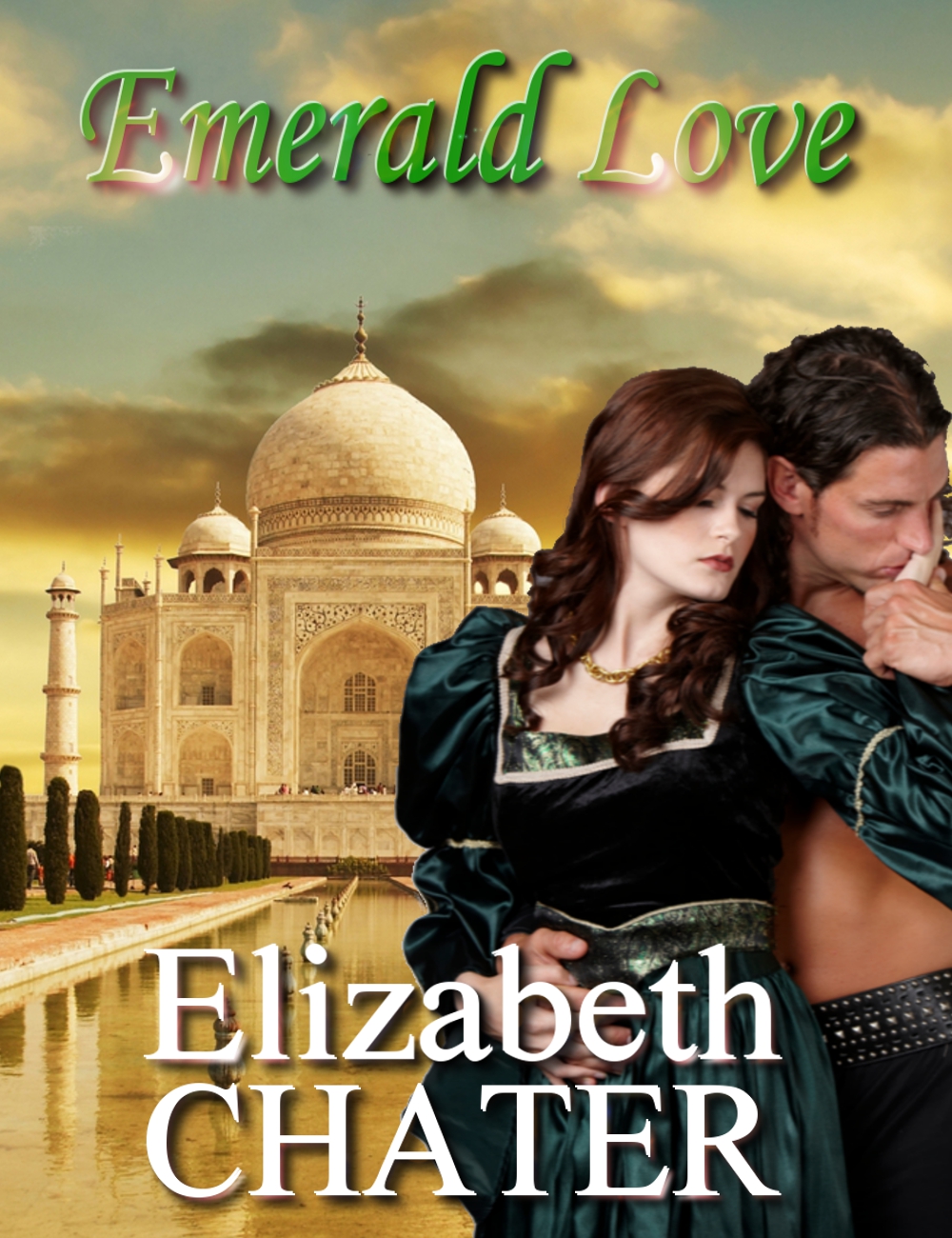
I published Elizabeth Chater's book, Emerald Love, on May 5 and by May 17 she had 0 sales. No sales for twelve days may not seem like a big deal, in fact it’s a reality for most of us; I've gone weeks without a sale of my sci book despite great reviews, but most of Elizabeth Chater's romance books sell at least a few copies in the first week. So what happened?

When I uploaded Emerald Love, I categorized it as Fiction - Historical.  
After a few days of no sales, I lowered the price from 4.99 to 3.99. I know that similar historical dramas in the 150-200,000 word range are priced at 7.99-4.99 and I would put Emerald Love up against any of them, so I felt the price was justified. But after no sales, I began to doubt it. The other books  priced at 2.99 were enjoying steady sales.
So I changed the price from 4.99 to 3.99.
A week went by. No sales.
I changed the cover.


No sales.
I brought the price down to .99cents!
No sales!
What the…?

I checked the document, making sure it was formatted correctly. No errors, looked good. Then I went to her amazon page. The search results said she only had 10 romances available, seven historical, three regency. Where was the eleventh?  

I had tagged the book: Romance, England, 1856, sepoy mutiny, etc. Why wasn't it listed as a romance?—because tagging doesn't put the book in Amazon's categorization system! So I went into the Bookshelf and discovered I had missed the "Romance" genre selection. I should have selected Fiction-Romance-historical. I made the change and re-uploaded it.

The next day there were two sales.

The moral of the story? Romance sells. And categorizing your book under romance on Amazon sells it. If there was any doubt the amazon categorization algorithms don't help, this should put that to bed. It proves that there's a big market for romance.  
My next book…hunky aliens from Venus…

Wednesday, March 28, 2012

To Preach or Not to Preach in Your Writing

I got a review for my book The Traveler's Companion that I thought was exceptional, despite the criticism. 


"This book was an excellent read. Don't let the three star rating take away from a great book. The author has written a smart, elegant, and enjoyable story. However, I found myself distracted by the preaching throughout the prose. The opinions of the author are obvious and overstated.  )"


The question is, can an author inject his opinions about life in to a narrative? For me, the answer is yes. The reality is, there's no way not to do this. The opinions will always seep through, no matter how hard an author tires to suppress them. Often the content or story line reveals the opinions of the author. I know that, when I watch most entertainment generated out of Hollywood, that I am going to get a certain political point of view: an evil handgun is going to mysteriously get up by itself, shoot an adorable minority girl who has skin cancer because of global warming, and when she's taken to the hospital, she's turned away because she doesn't have health insurance. Is this a modern day tragedy or political bias? Both. Is it good art or bad? Neither. If you don't agree with the politics, it's bad, if you do, it's a fair reflection of urban life in our times. 

But shouldn't the author suppress his political or religious opinions? Hell no. Why should he? One should hope that an author's first priority is to the truth, but an author without an opinion is worse than being overtly preachy--its cowardess, and the prose will reflect it. The danger is that the author uses popular media bias to help sell a work or to pander to an audience, rather than try and prove a point with facts and interesting insights. An author should also hope he doesn't appear overtly preachy, like I was criticized for up in my review, but as I've stated, its better to have an opinion in a work than not have one. 

Was a movie about a premature ice age caused by modern pollution preachy, as in The Day After Tomorrow or in Soylent Green? Maybe. Were you entertained despite it. Probably. The political message behind the work had to be stated in order for the work to have any relevance. The writers endeavored to touch on subject matter important to modern viewers as a vehicle for a cool concept. Whether or not global warming is a reality is up for the viewer to decide. For me, I like to be presented with factual information, a realistic debate rather than media hype, but first and foremost I want to be entertained. It's entertaining to get insights into modern debates, if they're good insights. For instance, Schindler's List has a message: one man can make a difference, even when he's pitted against the most powerful army in history. Do you agree with this in every instance? Probably not. The other obvious theme of the movie is that racism and anti-antisemitism are destructive, cruel, and will ultimately fail as a social policy. Do we argue or blame Spielberg for his opinions? I don't. Avatar is about the spiritual connection between a race of beings and their environment: destroy the environment, destroy yourself. Corny or great art? It's the top grossing movie of all time, so be careful before you say corny. Titanic, another Cameron super success, is about man's arrogance with respect to nature. The Dark Night has Batman learning that extreme good is inexplicably tied to extreme evil. The writers could have left out their opinions or insights into life, but the work would have suffered. 

Hopefully an author will know when his opinions are hurting the work, but if a reader doesn't agree with your opinion, even a little will seem too much. I try to craft my themes into a work so that I have clearly stated my position, and, hopefully, in the most entertaining way possible. After that, its up to the reader to decide. 

I want to thank the reviewer for the honest appraisal of my work and, because the book is FREE for a limited time on Smashwords, I'd like to invite everyone to take a look and see for themselves if the reviewer was correct in this instance. I'd also like to hear from other authors about this subject. To preach or not to preach!
    

Tuesday, February 21, 2012

OMEGASPHERE A new novel by Christopher John Chater

Omegasphere is finally available on Smashwords! It should be up on Amazon in the next couple of days. This is a psychological thriller, but the core theme of the book is about where ideas come from.

I had a friend years ago who asked me where I got my ideas. It's an odd question to ask a writer, because the truth sounds sort of corny. The reality is we don't really know . . . yes, everything a writer does goes through the filter of his own personality and experience, but we don't know where the original idea comes from. God? The universe? The media? My guess is that it's probably all of the above. In the case of Omegasphere, I examine several possibilities through the characters Ursula and Kurt. Ursula is a memeticist, a scientifically minded cynic, and Kurt is a science fiction writer who is more open to mystical and paranormal concepts. Memetics is the study of how ideas spread in a culture, the brain child of controversial atheist Richard Dawkins, who began the study as a way to augment Darwin's theory of evolution using social  phenomena, such as how ideas are passed from mind to mind. To simplify the science, one person gets the idea to cook food, and then the idea is copied or mimicked by someone else. Soon the idea spreads throughout a culture or society, eventually reaching critical mass when everyone is cooking their food. The idea makes society as a whole healthier; people live longer and thus they have more time to pursue intellectual pursuits, which of course helps mankind to evolve.

Sometimes the ideas are copied incorrectly.They mutate while being past from host to host, and this creates a problem. The media makes its living this way, spreading half truths for political and or financial gain.Think of urban legends that exist for decades, even centuries, and influence social thinking without people even being aware of it! But there are great examples of ideas that make life better. Because someone came up with the idea for an ereader, one can now sit in relative comfort and read Omegasphere for only 2.99 on Smashwords :).  My hero wants to figure out where ideas come from originally. . . and when he's suddenly given remarkable extrasensory abilities, he's on his way to finding out.

Here's the description for the book:


Kurt Robbins always wondered where ideas came from. Then he found out. . . .

Kurt Robbins just finished his first novel and his editor loves it. The only problem is that six other writers submitted the same manuscript, word for word. Is Kurt a plagiarizer, or had something or someone seeded his mind with the idea? Memeticist Ursula Stevens is Kurt’s only hope in finding out the truth. While being chased by an unknown government agency, Kurt and Ursula search out the other authors, hoping to figure out who infected them, and why, day by day, Kurt’s intelligence is growing by leaps and bounds.

I'd like to dedicate this book release to my brother, Kerry. Get well soon, bro.