Wednesday, March 28, 2012

To Preach or Not to Preach in Your Writing

I got a review for my book The Traveler's Companion that I thought was exceptional, despite the criticism. 


"This book was an excellent read. Don't let the three star rating take away from a great book. The author has written a smart, elegant, and enjoyable story. However, I found myself distracted by the preaching throughout the prose. The opinions of the author are obvious and overstated. (  )"


The question is, can an author inject his opinions about life in to a narrative? For me, the answer is yes. The reality is, there's no way not to do this. The opinions will always seep through, no matter how hard an author tires to suppress them. Often the content or story line reveals the opinions of the author. I know that, when I watch most entertainment generated out of Hollywood, that I am going to get a certain political point of view: an evil handgun is going to mysteriously get up by itself, shoot an adorable minority girl who has skin cancer because of global warming, and when she's taken to the hospital, she's turned away because she doesn't have health insurance. Is this a modern day tragedy or political bias? Both. Is it good art or bad? Neither. If you don't agree with the politics, it's bad, if you do, it's a fair reflection of urban life in our times. 

But shouldn't the author suppress his political or religious opinions? Hell no. Why should he? One should hope that an author's first priority is to the truth, but an author without an opinion is worse than being overtly preachy--its cowardess, and the prose will reflect it. The danger is that the author uses popular media bias to help sell a work or to pander to an audience, rather than try and prove a point with facts and interesting insights. An author should also hope he doesn't appear overtly preachy, like I was criticized for up in my review, but as I've stated, its better to have an opinion in a work than not have one. 

Was a movie about a premature ice age caused by modern pollution preachy, as in The Day After Tomorrow or in Soylent Green? Maybe. Were you entertained despite it. Probably. The political message behind the work had to be stated in order for the work to have any relevance. The writers endeavored to touch on subject matter important to modern viewers as a vehicle for a cool concept. Whether or not global warming is a reality is up for the viewer to decide. For me, I like to be presented with factual information, a realistic debate rather than media hype, but first and foremost I want to be entertained. It's entertaining to get insights into modern debates, if they're good insights. For instance, Schindler's List has a message: one man can make a difference, even when he's pitted against the most powerful army in history. Do you agree with this in every instance? Probably not. The other obvious theme of the movie is that racism and anti-antisemitism are destructive, cruel, and will ultimately fail as a social policy. Do we argue or blame Spielberg for his opinions? I don't. Avatar is about the spiritual connection between a race of beings and their environment: destroy the environment, destroy yourself. Corny or great art? It's the top grossing movie of all time, so be careful before you say corny. Titanic, another Cameron super success, is about man's arrogance with respect to nature. The Dark Night has Batman learning that extreme good is inexplicably tied to extreme evil. The writers could have left out their opinions or insights into life, but the work would have suffered. 

Hopefully an author will know when his opinions are hurting the work, but if a reader doesn't agree with your opinion, even a little will seem too much. I try to craft my themes into a work so that I have clearly stated my position, and, hopefully, in the most entertaining way possible. After that, its up to the reader to decide. 

I want to thank the reviewer for the honest appraisal of my work and, because the book is FREE for a limited time on Smashwords, I'd like to invite everyone to take a look and see for themselves if the reviewer was correct in this instance. I'd also like to hear from other authors about this subject. To preach or not to preach!
    

Tuesday, February 21, 2012

OMEGASPHERE A new novel by Christopher John Chater

Omegasphere is finally available on Smashwords! It should be up on Amazon in the next couple of days. This is a psychological thriller, but the core theme of the book is about where ideas come from.

I had a friend years ago who asked me where I got my ideas. It's an odd question to ask a writer, because the truth sounds sort of corny. The reality is we don't really know . . . yes, everything a writer does goes through the filter of his own personality and experience, but we don't know where the original idea comes from. God? The universe? The media? My guess is that it's probably all of the above. In the case of Omegasphere, I examine several possibilities through the characters Ursula and Kurt. Ursula is a memeticist, a scientifically minded cynic, and Kurt is a science fiction writer who is more open to mystical and paranormal concepts. Memetics is the study of how ideas spread in a culture, the brain child of controversial atheist Richard Dawkins, who began the study as a way to augment Darwin's theory of evolution using social  phenomena, such as how ideas are passed from mind to mind. To simplify the science, one person gets the idea to cook food, and then the idea is copied or mimicked by someone else. Soon the idea spreads throughout a culture or society, eventually reaching critical mass when everyone is cooking their food. The idea makes society as a whole healthier; people live longer and thus they have more time to pursue intellectual pursuits, which of course helps mankind to evolve.

Sometimes the ideas are copied incorrectly.They mutate while being past from host to host, and this creates a problem. The media makes its living this way, spreading half truths for political and or financial gain.Think of urban legends that exist for decades, even centuries, and influence social thinking without people even being aware of it! But there are great examples of ideas that make life better. Because someone came up with the idea for an ereader, one can now sit in relative comfort and read Omegasphere for only 2.99 on Smashwords :).  My hero wants to figure out where ideas come from originally. . . and when he's suddenly given remarkable extrasensory abilities, he's on his way to finding out.

Here's the description for the book:


Kurt Robbins always wondered where ideas came from. Then he found out. . . .

Kurt Robbins just finished his first novel and his editor loves it. The only problem is that six other writers submitted the same manuscript, word for word. Is Kurt a plagiarizer, or had something or someone seeded his mind with the idea? Memeticist Ursula Stevens is Kurt’s only hope in finding out the truth. While being chased by an unknown government agency, Kurt and Ursula search out the other authors, hoping to figure out who infected them, and why, day by day, Kurt’s intelligence is growing by leaps and bounds.

I'd like to dedicate this book release to my brother, Kerry. Get well soon, bro.


Friday, February 10, 2012

We've published a lot of books in the last month. Here's a recap.

 
Bait for the Tiger. A novelette, now .99c everywhere.


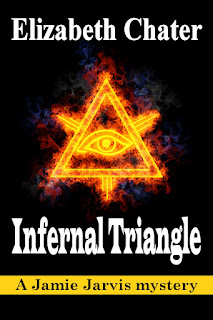
Infernal Triangle. Part of the Jamie Jarvis short story series. Bette Chater had a paranormal detective way before Psych came along. .99c everywhere.

Jamie Jarvis is on the case again. This time a car looks like it's crashed, but it hasn't hit anything. 99c everywhere.

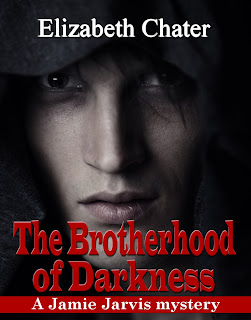
Jamie infiltrates a monastic cult. FREE on Smashwords.


Operation Disaster is one of the science fiction stories Bette published in Fantastic Universe Magazine. Steve Vannevar has to travel back in time to stop a nuclear war. FREE on Smashwords. 

The Treasure of Mars. An alien wanders in from the desert and has great treasure to offer to save the children of its world. .99c everywhere.

Milady Hot-At-Hand.  Andrea disguises herself as a boy to investigate her sister and father's murder. 2.99 everywhere.

The Duke's Dilemma. In an attempt to save her younger brother, Lady Leslie fleas to London and into the arms of the Duke of Kenelm. 2.99 everywhere.

The Elsingham Portrait. Lonely librarian, Kathryn Hendrix, is taken back in time to occupy the life of Lady Elsingham.  2.99 everywhere.

The Runaway Debutante.  Matilda's father loses everything in a gambling debt, including her, but she courageously fleas for her freedom, becoming the personal chef and the delight of Major Bruce. As their love grows for each other, Matilda's past comes back to haunt her.  2.99 Everywhere.

The Marriage Mart. While Athena's grandmother tries everything to find her bookish granddaughter a husband, Athena makes an enemy of the most eligible bachelor in London. 2.99 everywhere.


Whoa . . .  that's a lot in just over a month, and there's still tons more to go. For now we're making sure all the books are exactly the way Bette would have wanted them, so please send me your thoughts or critiques on any of the books. Late this month my book Omegasphere should be ready to go (only a few months past deadline!), and plenty more Bette Chater books.  Enjoy!


Monday, January 9, 2012

I Met Greg Bear and You Didn’t


I went to Mysterious Galaxy bookstore to meet Greg Bear and hear him speak. He's currently on a book tour promoting the second edition of his Halo book series, Halo Primordium, which is based on the mega popular video game. 
 

During his talk, he was nice enough to introduce me to his fans as the grandson of his great friend, mentor, and colleague Elizabeth Chater. He also gave some history of their relationship that I found incredibly interesting. 

Back in the 1960's my grandmother went to work as an associate professor at SDSU, and a then 19 year-old Greg Bear took one of her courses and was immediately impressed with her teaching style, and by the fact that she was a published science fiction pulp writer. He went to her and suggested they start a course in science fiction writing. The obstacles were many. This would be the first such course taught at SDSU--in San Diego, in California! She was a woman in a professorial boys club. And the English department had an up-turned nose for any mention of science fiction. She and Mr. Bear went forward with it anyway and started a science fiction creative writing course, making 100 slots available. 200 people showed up. The class was enormously popular and continued to grow in popularity for nearly a decade. They even had Rod Serling, Ray Bradbury, and Harry Harrison come to speak to their class. 

It's no accident that, because of the pioneering efforts of my grandmother and Greg Bear, the epicenter of science fiction in the world, Comic Con, is now held in San Diego. They, and a handful of others, blazed a trail for science fiction that has made it, according to Gregory Benford, the “Defining genre of the twentieth century.”
 
Pretty sweet. 

I was also impressed with how friendly Mr. Bear was— I'm going to call him Greg, since he and I are now BFF's—and how wise his council was to the some of the other writers and teachers in the crowd. His key to success: Don't give in to convention. Study the classics, learn from the masters, but don't succumb to current popular opinion or scientific flavors of the week. The parochial world of science can sometimes smother innovation. I think this is good advice, and, foolishly, I was almost surprised to hear it from him. I had expected him to say something more academic . . .  but now I see why he's a pioneer in the field and a bestseller.  

Thursday, December 22, 2011

What I've Learned About Self-Publishing So Far


I was tempted to leave this blog blank.

Rim shot.

2011 is almost over, so it's time to reflect.

I've been self-publishing for almost a year, and I've tried a few things. Some of it has worked, some of hasn't.

Here's a recap:

Copy editing. Copy editing is probably the most important part of self- publishing and the industry has suffered because many have ignored this. I still see a few self-pubbers out there with buckets of talent, but who are publishing work that's riddled with editing mistakes. If Sophie had to choose between good book, good cover, good editing, or good formatting, she would probably pick good copy editing. A great book with bad editing is like a stuttering speaker, the ideas get lost.

Doing your own cover artwork. I've learned a lot and it's been a lot of fun, and most of my covers look pretty darn good, but if I had unlimited funds I would pay someone.  My financial situation has forced me to do it myself, but I wouldn't necessarily recommend to a newbie that he do the same. I would pay for it if I could. The ultimate would be to find a great artist and build a working relationship over a period of years. With that said, my next book will be a cover I made and it's pretty sweet. 

Getting press in the local paper. I can say for certain that this didn't affect my sales at all, but it was a lot of fun and it only took a day or so to put together a press kit. It also taught me how to do a press kit, which was useful when submitting books to reviewers. Because of the article, I was also contacted by a local writer, so it did connect me with the local writing community, which is always a good thing. Unfortunately it didn't sell books.

Getting reviews. LibraryThing is a great resource for this. I've had a few bloggers review my work and I also got a review from Midwest Reviews. I didn't expect to like this part of publishing, but it's been awesome. A good review will keep you warm those cold nights when sales are slow. For me it has affected sales in a positive way, but only slightly. The trick is to get reviewed by many blogs or by a blog that has hundreds or even thousands of followers. Sometimes they're backed up with requests, but I remain diligent in pursuing this course because I think it’s the brass ring. I haven't paid for a review. I don't have the money, and I'm not sure how I feel about it yet.   

Blogging. You're here aren't you? Banging out a blog or two twice a month isn't too hard, but there's a lot of competition out there. A good blog can have a huge effect on sales, but for me it's been mostly about staying connected to the community, and I like the feeling of sticking it to the man.  

Social Networking: Librarything, Goodreads, Facebook, Twitter, and Shelfari are great resources for writers. I've made friends, maybe an enemy or two, shared many a laugh and a few tears, and found that it does help sell books. Putting in the time is the hardest part, but it's worth it. Mostly I've found that we writers are "friending" and trying to sell to each other rather than to readers, but that's ok. After complimenting a fellow writer's book cover, she responded with buying and reading one of my books, gave it five stars, and wrote me a sweet review. She has since become a good friend. We'll be getting married this June—just kidding.

All and all self-publishing has been one of the great experiences of my life. But it has yet to pay the rent. During the time you've read this blog, Konrath has probably sold more books than I have the entire year, but I think it takes time to build a brand and a readership.  Only time will tell.

I'd love to hear from you. What things have worked for you or not worked?

Wednesday, December 7, 2011

Just got a great review from Midwest Reviews:

"The very fabric of reality may very well be in danger. "The Traveler's Companion" is a science fiction thriller as scientist and CIA agent Ryan Iverson must use his android with the power of seduction to take down world renown criminal C. C. Go. But Go has a new toy on hand, the Zone, where the mind trumps all in its creation, a technology that threatens the nature of the universe. As reality is bending to Go's will, Iverson doesn't know how he will stand a chance. "The Traveler's Companion" is a riveting psychological thriller, recommended."

Helen Dumont
Reviewer


See the review here: http://www.midwestbookreview.com/mbw/dec_11.htm#helen


Thank you Helen!